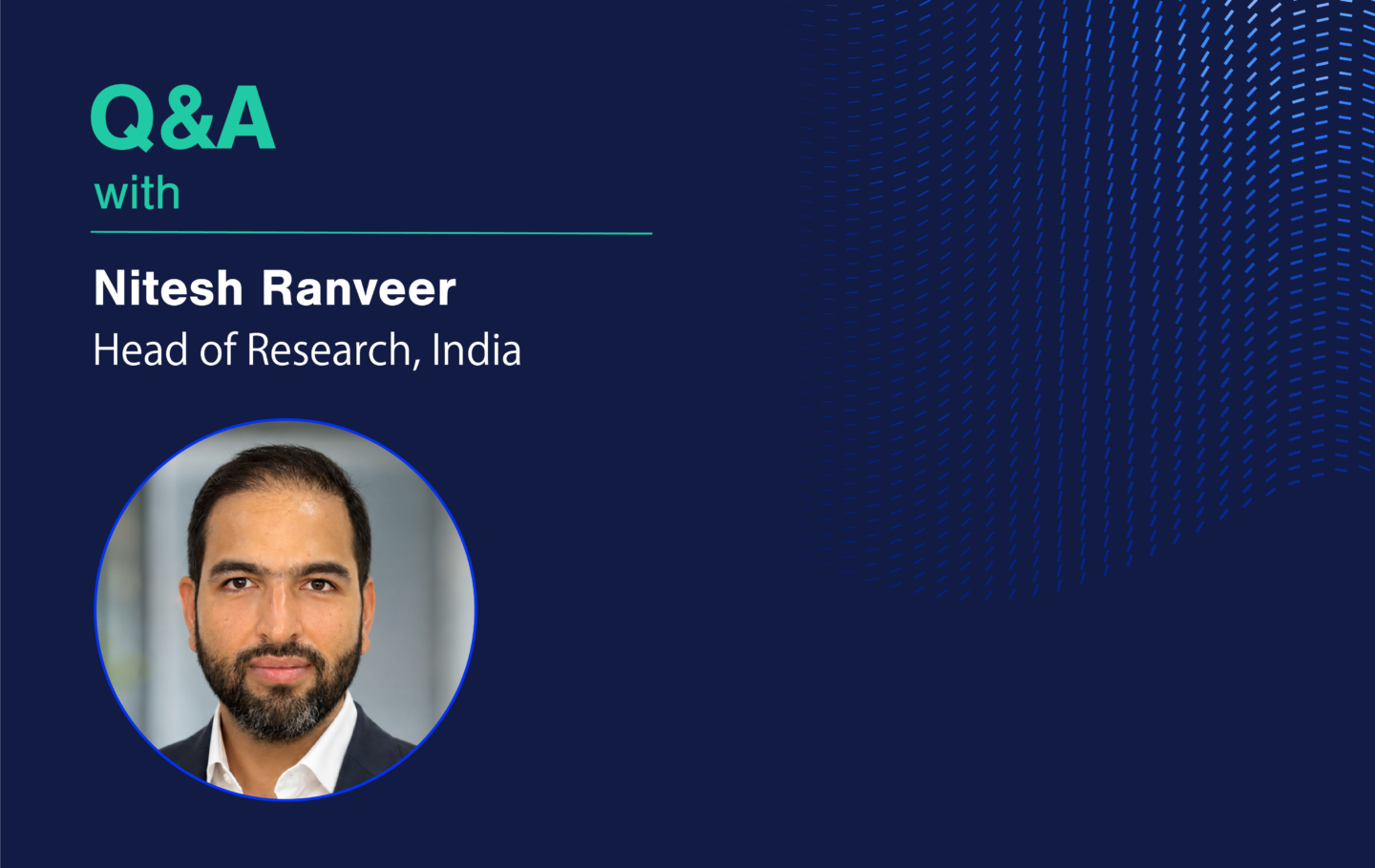
Nitesh Ranveer, our new Head of Research in India, shares his perspective on the role of Fundamental Equity Research at Millennium, how India connects into the firm’s global platform, and what he is focused on as he builds the research team in Bengaluru.

What interested you about joining Millennium and taking on the Head of Research role in India?
What excited me the most is the chance to build something for the long term – a team defined not by scale, but by strong talent, high standards, and a modern operating model that brings together research, technology, and AI.
How do you view the role of the India research team within Millennium’s broader platform?
I envision the India research team as a high-quality extension of Millennium’s broader research platform, working closely with investment professionals globally across core equity research workflows. The role will span across financial modeling, earnings coverage, sectoral analysis, and thematic research.
More broadly, the team is being built not just to add capacity, but to become a scalable and well-integrated research capability – one that combines strong analytical support with close alignment to investment teams, internal tools, and AI-enabled workflows.
What are the key priorities in the near term as you build the team?
In the near term, the focus is on getting the foundations right — hiring strong talent, establishing the right operating model, and ensuring the team is set up to work closely with investment professionals from day one. That means emphasis on talent quality, training, and embedding the team into a broader research platform. Another priority is to make sure the team is built with strong integration into Millennium’s internal tools, along with a practical focus on using AI to improve workflows, consistency, and quality of output.
As AI becomes part of every conversation, how is technology shaping the way research is conducted at Millennium?
Technology has always been an important part of the research process, but AI is clearly accelerating how quickly that process is evolving. One of the key opportunities for the India team is to build that AI capability in from the outset. That means starting with strong research fundamentals, while also putting a real emphasis on using technology and AI to improve how work gets done day to day — whether that is making workflows more efficient, improving consistency, or allowing analysts to spend more time on higher-value analytical work.
More broadly, I see technology as an important part of how the team will integrate into Millennium’s research platform over time. The goal is to use internal tools and AI to strengthen the research process, while keeping judgment, context, and accountability with the analyst.
Looking back on your own career so far, what lessons have shaped how you lead research teams today?
My career reinforced that strong research teams are built on a combination of high standards, mutual trust, clarity of purpose, and a real sense of ownership. People do their best work when expectations are clear; the quality bar is high, and they understand how their role connects to the broader investment process.
I have also learned the importance of building teams in a way that allows people to grow over time. For me, good leadership is not just about driving output — it is about creating an environment where talented people can develop strong judgment, keep learning, and contribute meaningfully within a high-performance culture.